Turning Hurt Into Relief
Touching the Hemophilia Community

By Karrie Mowen, Editor


How can you help a client when even your gentlest touch can bring harm? How can you bring relief when you're afraid to touch this fragile body   lying on your table? These are the dilemmas in offering therapy to people with hemophilia, an inherited blood clotting disorder affecting approximately 20,000 Americans, the majority of which are men. Where therapeutic hands bring relief to most, people with hemophilia can be seriously injured by bodywork. Making sure that "touch" and "pain" are not words synonymous for those with hemophilia is Renee Weaver, founder of the Touch Factor Foundation, a non-profit working to spread the benefits of massage to those with this incurable disorder.

Since starting her work on people with hemophilia in 1994, Weaver has been awakened to the great need of this community to be touched, both therapeutically and emotionally, and she shares that vision with anyone who will listen. Her passion for this work is undeniable, her devotion is inscrutable and her desire to help is without question. This is her story, but it is also the story of a community in need.

Why Hemophilia?
Ask Weaver what brought her to this world, and she'll tell you it's hard to explain. Ask her again and she'll start telling you about "Mike." The story is simple enough - the results are not. A client, one day, asked Weaver if she'd considered working on people with hemophilia. Weaver said she gave the textbook response, "It's contraindicated." As the words came out of her mouth, Weaver realized how limiting they were. "Was it really because it was contraindicated and would prove harmful to anyone with hemophilia, or was it because no one had researched the potential of this work and found how it might benefit?" Over time, she and her client of that day realized it was the latter.

In the spring of 1994, after much research and investigation, Weaver attended a retreat targeting the hemophilia community. Her task was to provide information on massage and offer bodywork for anyone interested. "To say the least, I was petrified, but deep down inside, I knew something very wonderful was about to happen. That something wonderful was the one person game enough to see me that weekend - Mike. "Mike was the first 'body' I had seen with hemophilia. I knew what the textbooks said about the hemophilia body, but in front of me I had an extreme example of a body ravaged by the disorder. He had had several operations, both ankles were fused, both knees had been replaced, there was evidence of several hip surgeries and elbow surgeries, and his back looked as if he had scoliosis. Eventually, one elbow had so much joint degeneration that the joint didn't exist." Weaver gets emotional just thinking of the courage it took for this willing client to offer his body to her hands. For that first session, Weaver asked Mike to choose an area on his body she would work. "He chose his calves and ankles, saying they were very sore. At that time I had no comprehension of what that meant." Weaver explained that those with hemophilia can be highly medicated individuals and that massage can overstimulate the system. So she started this ground-breaking session by simply holding his ankles and legs. "What I saw was a body that's been cut, bled, poked and prodded from the beginning of time. I worked very gently, maybe 20 minutes. He had to constantly change position on the bed and there was a lot of propping with pillows. I offered a tiny bit of rocking in the lower back, like in pregnancy massage, then some brushing." Weaver said the light work felt almost as if she had done nothing and she would be surprised if the client felt anything. She left the room when finished and told Mike to holler when he was ready to get up.

Minutes later, Mike walked into a room filled with Weaver, Mike's wife Sharon and Weaver's original cohort in the project, Sandy. His wife asked how it went and he replied, "My legs don't hurt." With trepidation, the wife said, "Come on." "No really, my legs don't hurt right now. I feel kind of good," Mike reiterated. Weaver said she looked at Sharon and saw a tear in her eye. "You don't understand," Sharon finally explained. "There's not been a day that's gone by since the day he was born that he's not been in pain," she said. "He did not know what no pain felt like," Weaver said through tears. "It was then we knew that this was way bigger than we thought."

Weaver is touched by Mike's courage and what he taught her about the hemophilia community, especially now, since his death in late 1998. "He taught me fear with no fear. Because he was so brave and so willing to jump, it gave me the opportunity to ask him anything. 'What about this?' I would ask. 'Well, try it,' he would offer." Over the years, it was Mike who helped Weaver uncover the needs of the hemophilia community and how she could be a part in addressing those needs.

Even in his absence, Mike is still able to laud the work of Weaver. He wrote just months before his death: "Sharon and I continue to encourage you to stay focused to make the Touch Factor Foundation a recognized and acceptable addition to the care of people with bleeding disorders. We sincerely feel your dream and talent will be an essential component in the future care of hemophilia.

Speaking as a person with hemophilia, you have helped me maintain joint function and have improved my quality of life. I wish you had started the Touch Factor years ago as I can think of five knee, ankle and elbow surgeries that might have been avoided."

What is Hemophilia?
Hemophilia is a blood disorder, occurring primarily in males, where the clotting proteins - which allow typical bodies to heal and recover from injuries - are deficient or inactive. When a person with hemophilia is injured or bruised, they do not bleed harder or faster, just longer. Contrary to common belief, people with hemophilia are much less concernedwith a surface cut or bruise than with  internal bleeding into a muscle, joint, organ or the head. Hemophilia presents in mild, moderate and severe cases.

Repeated bleeding into the joints (a normal strain for you or I) if not treated promptly for someone with hemophilia can cause intense pain and damage to the joint itself. Weaver described a joint bleed as happening this way: A clot occurs within the bone's synovial membrane after an injury, tear or strain, typically at the tip of the joint in the synovial capsule. A normal clotting process releases enzymes to dissolve the clot. With hemophilia, the person continues to bleed and to seep. "Through excessive bleeding, the blood pools within the joint capsule and there is a tremendous amount of swelling. Enzymes released to dissolve the clot are sent out, but the solid clot is not there. Eventually, the enzymes not only  eat away at the clot trying to develop, but they start trying to dissolve the bone."

The pain associated with bleeds is high. "It's been described to me like taking a hammer and hitting your elbow. It feels like that initial blunt burn," said Weaver. "When you put your hand around a bleed site, it's very hot and the tissue is almost like an edema swelling, but it's hard. The pain doesn't completely subside until the bleed stops. Hemophilia can be a very painful disorder." The story gets worse for the majority of people with severe hemophilia who infused "factor" concentrate between 1980 and early 1985. (Factor is a concentrated form of the missing clotting agent in the bloodstream which someone with hemophilia administers to themself through injection.) Many of these people were infected with HIV via the blood supply. "Every month I get a phone call informing me of someone we've lost." This becomes one of the more difficult aspects for Weaver - "You deal with bodies in physical, emotional and spiritual pain. Then you deal with the fact that chances are you can lose this client before they stop seeing you." The "before factor" group has a life span of 40-50 years; the "after factor" group has a more normal life span.

Hemophilia Medical Care
Comp Care Teams:
As there is no cure for hemophilia, Weaver says treating those with the disorder becomes a "management situation" from the day they are born and lasts throughout their lives. "Hemophilia can define how you live your life," she said. Part of the lifelong treatment for those with hemophilia comes in the form of federally-funded hemophilia treatment centers at which a patient sees members of their comprehensive care team once or twice a year. That team is made up of physical therapists, orthopedists, nurses, counselors, hematologists, psychosocial therapists, geneticists, infectious disease experts, nutritionists, immunologists, dentists and a host of physicians - basically everyone who needs to be involved in understanding the common denominator in the patient's health. "It's a team of experts who discuss and treat the patient collectively," she said.

The problem, Weaver said, is that in the last 20 years, some of the benefits of the comprehensive care team have been taken away from the patients, partly because of funding, but also because of factor. Weaver said once factor came along in the late 1970s, people could begin treating themselves from home, instead of having to live in close proximity to the care centers. "Now they can keep factor in their refrigerator and infuse themselves. As a result, these patients have been relying less and less on the treatment centers and their treatment teams.

"What I want to do is show that massage therapists are a valid component of the comp care team, and that not only can we have the nurse and the physical therapists, but we can have a massage therapist attached to the treatment centers. Then we have the flip side: Since more patients are treating themselves at home, and because massage therapists make house calls, and due to the nature of the relationship with our clients, we would almost be a link to the individual treating themselves at home with factor and their physicians. The massage therapist could keep the team intact even where funding might not allow for it anymore."

How to Touch Someone with Hemophilia
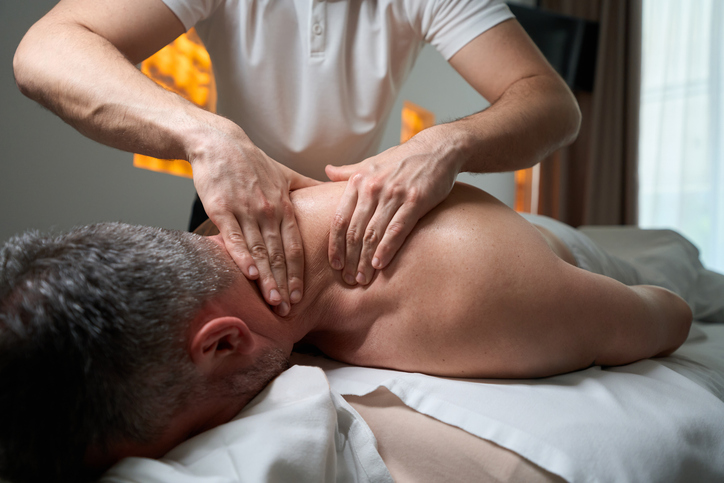
Special care, that's the best way to describe how to deal with clients who have hemophilia. Weaver said the touch she applies is always a "soft" touch. "You always begin with light work and it usually stays with light work." Monitoring pressure is critical to tissues which can be damaged so easily. "My guideline is always a very relaxed hand. If my hand is really relaxed, that's the pressure, because that's no more pressure than what they've experienced in their day-to-day life." Weaver said she constantly watches to see if her thumb falls into a pressure point position, and quickly reprimands herself if it does.

In a physical sense, working on people with hemophilia is much easier on the massage therapist. But it's the mental aspects which prove even more challenging. "Mentally you have to be very focused and it can be very taxing, because it goes against what we do in our everyday practice where we find a knot and work it. I have to pull back and not work that trapezius, so it takes a lot longer to work out the kinks."

When Weaver does come across a "kink" that needs releasing, she will find the trigger point for that area, place her finger on it and visualize herself doing the deep tissue work. "I have no idea if it works, but they feel better," she reports. The utilization of energy work is also effective when a client reports with, for example, a bad elbow bleed. Staying completely away from the site, Weaver will administer Reiki and other energy modalities to help. "I've never seen bodies take in energy work so readily as a hemophilia body during a bleed," she said. During a bleed, Weaver explained, every single molecule is attending to that bleed site. "All that energy is going into clotting, stopping and repairing the bleed. The body's overall energy is drained and there is a tremendous imbalance in the body. When someone outside the body comes in to offer energy, it's like adding more voltage to a battery. It's very calming for them."

Weaver said she looks at a healed bleed site as a rehab opportunity. "These are continuous pain sites. After years of repeated bleeds, the tendons are shortened, range of motion is limited, and there is joint degeneration and synovitis."

With massage therapy, Weaver said she can take a limb that has fallen prey to continuous bleeds and increase circulation, get the blood flowing, get toxins moving and rejuvenate the muscle tissue. "I work toward the heart with a very relaxed pressure. I make sure I know if a port (for medications, etc.) has been put in, or a main line has been installed for IV drugs or for factor. You have to take that into consideration. Then I work toward the joints, fanning out in all directions from the joint." With a muscle bleed, Weaver said the same approach is taken. "I apply Reiki during the course of a bleed and stay away from it until it's completely healed. Then I apply very light, upward circulatory massage."

Weaver said a challenge in passing along her information to other therapists is getting them to check their egos at the door. "Hemophilia is bigger than you or the person on the table or any knot on their body. Every second, that person has hemophilia and every second you have to be aware of that and act accordingly."

Creativity and invention become big parts of a massage session for clients with hemophilia. Trying to get the client comfortable on the table is one of the first and biggest obstacles. "You end up learning to use your body to prop their body," Weaver explained. "If they're laying on their back and you want to work their arms, but their elbow only extends to an 'L' position, you're going to be very limited as to what you can do with body positioning." For example: "In order to work the forearm, triceps and biceps, I have to prop the elbow, step into the table, bring myself down to their elbow and then allow their forearm to rest against my shoulder as I reach in and do the work. It turns into a real nurturing session."

Weaver admits she'd almost like to have had this kind of close contact with all her clients. "Here we are, a profession that advocates touch, yet we still don't really 'touch' our clients. With this work, there's no separate bodies. It's all one dance, and there's a lot of really strong, positive psychological benefits to working in this manner - for both of us."

Cautions
As with any form of bodywork, there are certain cautions to be aware of while working with this group of people. Weaver said it's critical to be aware of range of motion limitations. "It dictates how and if you can put them on your table." Knowing about their bleeds is also critical. "I always begin by asking when was their last bleed and when they last infused. If they had a bleed within the last 24 hours, I'm just going to hold that site." Certainly, Weaver said, identifying their ports or lines for medications and infusions is important before beginning any form of bodywork, just as is knowing if they are HIV positive. "You must be aware of any open sores, of course, and be fully aware of the universal precautions for HIV and AIDS." She said having a thorough understanding of the other maladies that may accompany hemophilia and/or HIV is also important as some clients may suffer from dementia or disorientation. Overall, it's proper training that's required before laying hands on anyone with a bleeding disorder, for the protection of both client and therapist.

Building the Touch Factor Foundation
Weaver knows in her heart that massage therapy can provide relief for the discomfort people with hemophilia experience as a result of joint damage and other side effects of the condition. Her mission is to share and provide support for that belief. Hence the Touch Factor Foundation. After working with chiropractors for eight years and developing a strong private massage therapy practice, Weaver was faced with a decision. She had been incorporating clients with hemophilia into her practice through the years and found it offered a delicate balance to her work. "I had active outdoor people and those who were in rehab after car accidents. Then I had the flip side - very mental, very light, focused hemophilia work. I actually found that by doing the work with the hemophilia community, my sensory in the fingertips was heightened for my other work."

Yet, even though the two sides of her client base found balance, Weaver knew she couldn't split her attention any longer. Just recently moving to Montana, she knew she would either have to start another private practice from scratch, or jump headfirst into her heart's work - touching those with hemophilia. "It wasn't a huge choice," Weaver said of the decision she made with her husband's blessing. "He saw me grow in this work and he knew the need for it. It was a matter of us both saying, 'We've got to try and make this work'."

Today, all of the Touch Factor Foundation revenue is derived from grants - a revenue source difficult to garner. Weaver has been fortunate to receive funding from various home care companies, and recently received a two-year seed fund from Apex Therapeutic and Actsys Medical Inc. Still, the need is great, especially as Weaver continues to offer free educational opportunities. But, as she would tell you, the tightened belts, the counting of paper clips and the knocking on doors has all been worth it.

Hemophilia Research
Part of Weaver's mission to educate comes in the form of research. Weaver and her group have just completed a pilot study involving massage and hemophilia and the results were very favorable. "What we found out working with the participants has given us greater direction," she said. "The main goal of the research study is to show the benefits that massage and other somatic therapies have on people with hemophilia so that it can be implemented into their comprehensive care."

This pilot study piggy-backed off the Touch Factor Foundation educational programs. The same will hold true as the official research project gets underway. When a massage therapist enrolls in Weaver's free course, they qualify for 20 hours of continuing education. Instead of fees, upon passing the course, the therapist must volunteer 12 hours for the research project, thereby raising the CEUs to 32. "You not only get the continuing education, but you provide important research and eventually will have your name attached to a national research project." To be eligible for the educational offerings, and subsequently the research project, therapists must have graduated from an accredited school and be a practicing therapist. They must be insured and be comfortable working with people who potentially may have HIV.

In completing the initial pilot study, Weaver said she's come to several early assumptions. "I've found a few things: When it's bone on bone, the joint is degenerated and the arm won't extend any more, massage still gives the client the feeling that there's more movement and less pain. Where the joint is still pretty much intact, but the muscles are atrophied and the tendons are tight or immobilized, I've gotten some more movement with massage." She lists these other assumptions as well: improvement in the quality of life of the clients; a reduction, and in some cases elimination, of the chronic pain those with hemophilia have experienced throughout their lives; more mobility - whether it be an actual increase of range of motion or the perception of such; and fewer spontaneous bleeds. It's that last assumption that has Weaver most excited. "For some reason, the guys we've worked on in the study had fewer spontaneous bleeds during a 12-week period." What's important here is that these study participants have had their entire health histories recorded from birth and a comparison of before and after massage will be relatively simple. "They have treatment diaries, so we've already got hard data as a comparison."

How can massage be affecting this non-stop process for someone with hemophilia? "Physicians are unaware of the cause of spontaneous bleeds, but a general consensus is that spontaneous bleeds occur during stressful times. With massage, they are less stressed and have better coping mechanisms." Weaver said even though the medical community has a hard time associating improved health with less stress, she sees the improvement in "her guys." Weaver is undoubtedly excited about what she's seen so far in the pilot study and is anxious to move forward. "All I need are the bodies and the therapists."

What the Clients Say
In addition to all the information her first hemophilia client - Mike - provided, Weaver has heard again and again from clients. "We know, as therapists, the benefits of massage. We see it in our own practice with people not facing these conditions - more productive, less illnesses, more body awareness, greater immunity. Now magnify that by a billion and you get what these people with hemophilia feel after 15 minutes of massage."

Weaver has had reports ranging from better marriages because the husband feels better and is happier now, to more concrete anecdotes of physical well-being. "I had one client with severe hemophilia. He had a constant pain, though not a bleed, in his right elbow. By the end of the first four sessions, the client reported a dramatic decrease in pain. By the end of the next four sessions, the pain was gone. After four more sessions, the pain had not reoccurred. This was something he had been experiencing for months."

One client wrote to Weaver directly, "As someone with hemophilia/HIV, I have experienced the value that this therapy holds in reducing stress and joint pain while increasing my overall sense of well-being from both a physical and psychological perspective. As the medical, social and emotional challenges facing the hemophilia community become ever more complex, the need for innovative treatment alternatives delivered in a compassionate and knowledgeable manner becomes increasingly valuable." Another person with hemophilia wrote about his experience in the North Carolina Hemophilia Foundation newsletter: "Besides the obvious benefits, (massage) has helped, I believe, to speed my recovery from knee replacement surgery... I also find that I have fewer bleeds since I started massage therapy."

The Doors it Has Opened
Bringing massage therapy to a community that has been taught to fear touch is revolutionary, both in its cause and effect. "This is a new area for massage therapists - working as part of a comp care team and acting as a link between the individual and the home care team. We're creating a whole new job source for massage therapists. On the hemophilia community side, I think it's a type of empowerment for their own bodies and health and well-being. All their lives they've been educated from a medical standpoint, but they've only been given one side," Weaver said. "Knowledge is true power and the thing we should all be most knowledgeable about is our own bodies. We know more about our cars and our transmissions than the working of the respiratory or digestive systems. I'm wanting to give to this community a sense of knowledge about themselves that they wouldn't necessarily get from the medical community."

Where Next
No matter where the research leads or where the funding will come from next, Weaver has no second thoughts about the path she's chosen. She knows she is doing good work, loves the people she's helping and is committed to spreading the word of touch. She explains it this way: "These people have been touched all their lives - they're infused, diagnosed, examined, treated and approached. These are the most courageous people I've met. I'm just grateful I've had the opportunity to show them how powerful touch can really be."

For more information on the Touch Factor Foundation, call 800/747-5260


Please close window after reading.


©2002 Associated Bodywork & Massage Professionals. All rights reserved. No portion of this website may be reproduced, stored in a retrieval system, or transmitted in any form by any means, electronic, mechanical, photocopying, recording, or otherwise, without prior written permission from ABMP.