| 
"It's
not just the soldiers who are living on hair-trigger alert. It's
all of us. That's what bombs do. Whether they are used or not, they
violate everything that is humane. They alter the meaning of life
itself."
— Arundhati Roy author of War Talk |
| Preventing
Retraumatization
”Working with survivors inevitably creates
in the mind’s eye of the therapist a similar landscape of
pain, horror and hell as the one burned into the client’s.”
— Ed Tick
author of Sacred Mountain:
Encounters with the Vietnam Beast
What
can bodyworkers do to clear vicarious retraumatization and maintain
their vital capacity to serve? These suggestions come from people
who have worked in this field for more than 20 years.
• Remember beauty. Survivors survive because
they have some relationship with beauty. Journalist Chris Hedges,
who has covered the bloodiest of our recent wars, recalls how,
when captured and held prisoner, he recited to himself all the
poems he could remember and reconstructed the literature he held
dear. Therapists must learn from this. Cultivate what you find
beautiful and own this beauty as part of yourself.
• “Write, write, write.” These
are the words of Ed Tick, Ph.D., who has worked for more than
10 years with victims of the Vietnam War. He is a prolific writer
who uses language to implore us to wake up and heal. Clearly his
capacity to be of ongoing service is fueled and repeatedly regenerated
by his communication and outreach. To Tick’s recommendation
I would add “dance” or “make art.” The
point is to express your experience, not hold it in. Share it
with the world and the world will listen and respond.
• “Be with nature. Let your body
release through physical movement. Hike in the wilderness.”
These are the words of a World War II veteran whose health radiates
from his eyes.
• Receive bodywork. “Limit your practice
with survivors so that you can care for yourself.” This
is what Amber Gray, former clinical director of the Rocky Mountain
Survivors’ Center calls “mapping.” It’s
a requirement for her staff therapists and volunteers.
• Network. Connect with others in the field.
Feel yourself to be part of a larger community of healers with
the same intention to end the lineage of shock and trauma. |

Useful
mirroring and sensory
awareness language
”What are you noticing in your body?”
”Notice how you are breathing.”
”Where do you feel energy flowing in your body now?”
”If you are able to notice how you feel trapped in places
in your body, it is because you are now free.”
”You can be in charge now.”
”You can control how much you remember.”
”You have survived for a reason.”
”Now you can recognize when you feel
overwhelmed.” |
"I
have survived to tell my story so that people will know what really
happens in this world."
— A survivor of political torture after successful completion
of therapy |

"Bodyworkers
are in a better position to address shock and trauma than other
therapists because more people see them. People aren't healed by
medication. They are healed by connection and contact. For this
reason, somatic therapists are the ones who offer the most relief
for survivors."
— Steve Cannon, Vietnam veteran |
Ten
steps to resolve shock
1. Identify what can be learned from the experience.
2. Sustain and enforce the awareness of this learning.
3. Establish a strong relationship with your body.
4. Develop an inner witness.
5. Make a bond with nature.
6. Laughter is the best medicine.
7. Use language as a healing tool.
8. Use touch to heal.
9. Separate past from present.
10. Address shock immediately. —
from We Are All in Shock: How Overwhelming Experience Shatters
You and What You Can Do About It by Stephanie Mines, Ph.D.
|

Tools
for working with survivors
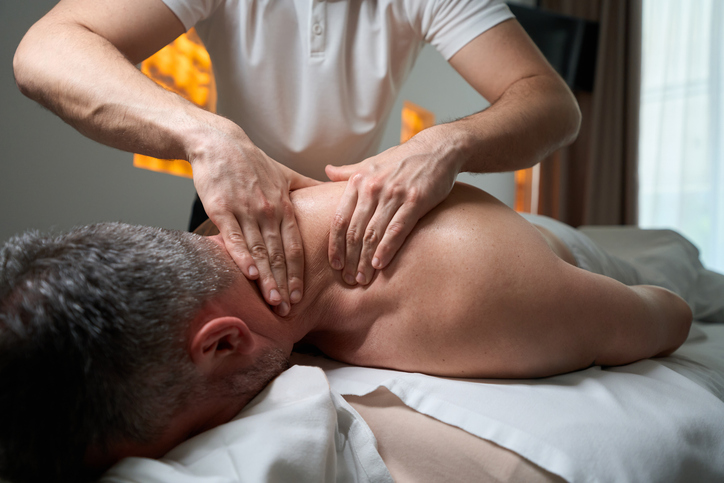
• Ask for permission to touch.
• Give the client the option of receiving touch while clothed.
Undressing is not required for massage or energy medicine.
• Encourage the client to let you know what feels safe to
him and what activates him.
• Use gentle hand placement.
• Pace treatment and maintain contact through dialogue.
• Advise client of your next move, such as: “I will
now work with your feet.”
• Work with the feet and encourage the felt sense of support
and connection.
• Do not push for storytelling.
• Make sure client is grounded before session completes.
• Respect what your client tells you. |
"Prepare
to have your heart broken if you want to work with survivors of
war and torture. There is no way to touch their lives without your
heart breaking."
— Amber Gray, former clinical director, Rocky Mountain Survivors'
Center |
|
War and the Body
Serving the Survivors
By Stephanie Mines
As a survivor of
torture I know how wounds of violation can live in the body and the
mind. My recovery included bodywork and so I know both its assets and
liabilities in resolving shock of this magnitude. I am now both a practitioner
and a teacher of somatic therapies for survivors, which has added substantially
to my perspective on what it takes to rebuild one’s life from
the pyres of hatred.
The war I lived
through was a political uprising, a struggle for equality with strong
racial overtones. The armies at battle were street fighters, indigenous
forces with primitive resources and police armed with advanced technology.
I lived for almost four years in an environment of ongoing violence,
followed by years of hiding after being beaten and tortured, ostensibly
for information, but actually as punishment for my beliefs and choices.
I have been able
to uproot most of the nervous system behavior instilled during this
period and resulting from these horrors. The successes and failures
on this journey orient me now as I construct resources with the clear
intention of serving both survivors and therapists. In addition, this
is my outreach to perpetrators of war, torture and human violation,
for once the cycle ends, it ends for everyone.
Here I focus specifically
on the somatic interventions that restore vitality and presence for
someone who has been in war or who has been affected by combat or the
violation of human rights. Indeed, massage therapists, energy healers
and bodyworkers of all kinds are the most likely candidates to contact
the truth of war. Our hands traverse territories where secrets are embedded.
Our fingers walk the borders between sanity and hysteria.
War is
like chemotherapy or radiation for cancer. The residual toxins, however,
live even longer. These toxins include environmental pollutants, like
depleted uranium or Agent Orange, that enter the soil of the earth and
the bodies of the survivors, including the DNA of the children they
bear. These toxins shape muscles, limbs and embryonic development. They
direct nervous system behavior, relationships and the expression of
emotions.
Guilt, rage, frustration, horror, grief and shame are also toxic byproducts
of war. They burrow into the folds of the brain and therefore into muscles,
ligaments, tendons and nerves. War lives in our bodies and in the body
of the earth for generations. Unless the energies of war are resolved,
pacified and repatterned, wars are inherited, passed like a monstrous
load from generation to generation in palpable ways.
When you
touch the body of a survivor of war or political torture, you are likely
to encounter buried land mines. All survivors are always, of necessity,
keeping something down, like someone about to vomit, having been instructed
not to. Without guidance about dismantling their own explosive energies,
survivors all too often go under. This is evidenced, horribly, by the
fact that the number of Vietnam War veteran suicides now doubles the
number of combat deaths, and continues to rise. (Daniel Hallock. Hell,
Healing and Resistance. Plough Publishing, Farmington, PA:1998.)
Who
Are the War Survivors?
War is everywhere. Chris Hedges, author of War Is A Force That Gives
Us Meaning, tells us that modern war is really a war against civilians.
On occasion we may foolishly think we are not the civilians Hedges is
referring to, but we are. We are all living in the midst of war. You
and I are the survivors. We participate in a world shaped by responses
to threat. The truth of this is in our bodies and in the bodies of all
those we touch.
Somatic therapists
put their hands on the body of truth, not the myth of war. We enter
the physical space between denial and surrender, between history and
personal reality. Our clients are not only those who survive experiences
beyond the nervous system’s healthy capacity to integrate. Our
clients are also the wives, husbands, mothers, fathers and children
of the combatants, living or dead. Our clients are the young people
threatened by the wars to come and the descendants of those who fought
in previous wars. This is why bodyworkers now, more than ever, need
an immediate education in the physiological, neurological and spiritual
consequences of overwhelming experience.
To treat the long-term,
deeply ingrained wounds of war and torture, our attention must first
go to the nervous system. This is the strand bodyworkers, knowingly
or unknowingly, unravel from the strangleholds of fear and denial. The
intricate interaction of skin, spinal column and neurology is what we
aim to free. Our hands communicate directly with survival mechanisms.
We, of necessity, evoke memories that reside, like throngs of insects,
just on the other side of a wall that combat veteran Farley Mowat calls
“the cotton wool of protective forgetfulness.”
The
Sacred Box
Denial is omnipresent in the body of the survivor. It is the sacred
box in which survivors keep their secrets. Denial is the best friend
of those who witness or experience combat, torture, horror and abuse,
including the war criminals themselves. Denial is neurologically established
for the purpose of survival. It is the commander in the reptilian brain’s
control center. Here, the commander, with the key to the box in hand,
obsessively issues orders to the body to survive terror. But the reptilian
brain only speaks in present tense. It needs education to vacate its
past protective role at the necessary time, like an overprotective mother
you must inform, even cajole, to step down when she is no longer needed
in this capacity.
Bodywork
inevitably seduces and draws out the body’s stories, and therein
lies both its gift and its warning. How precisely can we honor the release
of massive energies long withheld without reactivating original shock?
And what happens to us as we do so?
“It was only by listening to my body that I realized I was living
a lie,”says Vietnam veteran Steve Cannon, who specifically requested
his real name be used in this article. Cannon was adamant about the
crucial role somatic therapists and bodyworkers play. “I survived
by suppression, by burying everything in my body. What I needed was
direction about how to just be with my body and my feelings.
“It
should be a requirement,”Cannon continued with intensity, “that
every bodyworker dedicate themselves to studying how shock lives in
the cells of the body and how it can be reactivated. Bodyworkers need
to create a context for their clients to manage their emotional and
physiological responses or they are in danger of reinforcing denial
and perpetuating suffering."
The
Light at the End of the Tunnel
The three keys to somatic treatment for survivors are sensory awareness,
integration and grounding. These cannot be accomplished by touch alone.
Words to accompany somatic interventions and a spacious receptivity
are essential ingredients in the recovery formula. Appropriate interventions,
in combination with intentional dialogue, point to the light and the
life at the end of the tunnel. These particular skills, given the nature
of our reality now, have to be included in the curricula of a bodyworker’s
training.
Somatic therapists are the guides to this reclamation of the body —
the
treasure that is rediscovered after an arduous journey underground.
The rewards of life are what survivors earned but were unable to claim
alone. Thus treatment becomes rebirth, and bodyworkers are the midwives.
Immobility and constriction, otherwise known as freezing or parasympathetic
shock, is a common muscular condition for survivors. Vigilance or hyper-alertness
is its sympathetic twin. Becoming conscious of the specifics of both
tonic immobility and hypertension is an important step out of hell.
Gentle mirroring by the therapist of these holding patterns is a good
introduction to the unifying potential of sensory awareness. But the
mirroring must be done carefully and wisely. Both integration and grounding
must be assured before any bodywork session can be complete.
The danger in bodywork with survivors is that of intense reactivation
and emotional flooding. In fact, Amber Gray, massage therapist and former
clinical director of the Rocky Mountain Survivors’ Center, does
not recommend bodywork for torture survivors. “For the torture
survivor, physical contact is torture. All assumptions about the body
must be left behind when you approach survivors of war and torture."
Subtle interventions, such as energy medicine, are the most effective
and even they should be introduced in a titrated way, making sure the
effects of each intervention are observed before another is introduced.
This way the somatic portals to the wounded body and spirit are respectfully
opened.*
Somatic therapists
must listen to the cacophony of horror in their hands and in the voices
that report and release. This requires the therapist not run from pain.
Bodywork with survivors is both active and receptive meditation, slowing
us down, centering us by attending to what is. It is the direct opposite
of denial. Thus it is living compassion, having the tolerance to be
with the dark as well as the light, the shadow that is in all of us.
There are two other primary cautions to bodyworkers who choose to serve
survivors. One is not to move quickly and the second is to never be
formulaic. I asked Cannon what aspect of the bodywork he experienced
failed him. He replied it was the mandatory instruction to “drink
lots of water” or the smile that belies denial. When you bring
the darkness of the world to the massage table you don’t want
to be reminded to “have a nice day.”
Two
Survivors
Brian O’Leary’s (a pseudonym) sparkling eyes and joyous
laugh told me that although he lost all his friends (they were teenage
soldiers in World War II) at the Battle of Midway and nearly lost his
mind, he has healed. Ralph Peters (also a pseudonym), on the other hand,
could not look me in the eye at all. His plane crashed in Vietnam and
since then he’s crashed cars, and traumatized his body, over and
over again. His hands tremble with terror, guilt, rage and grief. The
keys to his new car, the one he had just gotten after his last crash,
rattled as he held them while we spoke. In the end, he left them on
the table, racing off to get to an appointment he clearly would not
make on time.
O’Leary chose the course of nature, using five element, or nature-based
healing systems** to find his way back to himself. His life now is one
of deep contemplation and well boundaried self-respect.
As a former
pilot, Peters keeps diving in. He has been Rolfed, structurally integrated
and medicated. He has gone on and off anti-depressants as often as he
has been in and out of businesses and relationships. He grasps for one
hand after the other. Desperate to be handsome, manly, youthful and
successful, he struggles to keep his emptiness at bay, whereas O’Leary
opened to it. This is the difference between organic pacing that allows
a knotted nervous system to find its way home and healing that is pushed
to its limits.
Interactive and carefully paced interventions hold the most promise.
These, however, require courage and mentoring. Mature attunement to
the body’s history will revolutionize the benefits of bodywork
for all survivors.
I think somatic
therapy is central to recovery from war and torture, but only with the
education and honed intention of bodyworkers. When our training instructs
us how to free the body from barbaric re-enactment, the profession of
somatic therapy will fulfill its purpose of empowerment and embodiment.
Then, those we touch will live to tell their stories with dignity and
we will be able to stop war at its source.
*Subtle energy interventions
that include education about recovery from abuse and violation and are
specifically available for bodyworkers are trauma touch therapy, the
TARA Approach and somatic experiencing.
**Five-element healing
systems include Five Element acupuncture, Ayurvedic and Tibetan medicine,
Qigong and the TARA Approach. These are beneficial adjuncts to psychotherapy.
Stephanie
Mines, Ph.D., is the founder and director of the TARA Approach, a holistic
treatment design for the resolution of shock and trauma. She is also
the author of We Are All in Shock: How Overwhelming Experience
Shatters You and What You Can Do About It (Career/New Pages, 2003).
Her program’s website is www.tara-approach.org.
|
Organizations
Serving Survivors
(*indicates they provide practitioner training)
•
Amnesty International, www.amnesty.org
• The International Rehabilitation Council for Torture Victims,
Borgergrade 13, Box 9049, DK 1022 Copenhagen K Denmark, +45-33-76-06-00,
fax: +45-33-76-05-00, irct@irct.org, www.irct.org
• Mentoring the Soul,* 761 Madison Ave.,
Albany, NY 12208, phone/fax: 518/463-0588, e-mail: edtick@juno.com,
www.mentorthesoul.com
Ed Tick has focused on services for combat
survivors, especially Vietnam veterans, for more than 15 years.
He is the author of numerous
articles and regularly offers healing journeys to Vietnam. His
commitment to the community of survivors is evident in the passion
and clarity of his writing and presentations. His organization
provides workshops, seminars and training.
• Rocky Mountain Survivors' Center,*
1547 Gaylord St., Denver, CO 80206, 303/321-3221, fax: 303/321-3314,
rmsc@rmscdenver.org*
(for volunteer training contact Valerie Moore, 303/321-3221, ext.
213)
• Sensorimotor Psychotherapy Institute,*
Box 19438, Boulder, CO 80308,
e-mail: office@sensorimotorpsychotherapy.org,
www.sensorimotorpsychotherapy.org
The Sensorimotor Psychotherapy Institute offers an adjunct course
specifically for massage therapists and bodyworkers.
• Somatic Experiencing,* Box 1872, Lyons,
CO 80540, 303/823-9524, fax: 303/823-9520, e-mail: ergos1@earthlink.net,
www.traumahealing.com
Somatic Experiencing was developed by Dr. Peter Levine, author
of Waking the Tiger: Healing Trauma. Extensive training
offers the opportunity to study, in depth, a naturalistic approach
to healing trauma.
• The TARA Approach for the Resolution of Shock
and Trauma,* 2910 County Road 67, Boulder, CO 80303,
303/499-9990, www.tara-approach.org, tara-approach@prodigy.net
The TARA Approach provides training in the
neurology and physiology of shock and trauma along with specific
subtle energy medicine interventions have proven successful for
survivors. Programs are open to massage therapists, bodyworkers
and all somatic therapists.
• Trauma Touch Therapy Program,* Colorado
School of Healing Arts, 7655 W. Mississippi Ave., Lakewood, CO,
80226, 303/986-2320, www.csha.net
This is an advanced program for bodyworkers and associated healthcare
professionals who want to better address the needs of their clients
who have experienced trauma and abuse. |
Reading
List
• Bartov, Omer. Mirrors of Destruction: War, Genocide
and Modern Identity. Oxford: Oxford University Press; 2000.
• Goleman, Daniel. Destructive Emotions: A Scientific
Dialogue with the Dalai Lama. New York: Bantam; 2003.
• Hedges, Chris. War Is A Force That Gives Us Meaning.
New York: Public Affairs; 2002.
• Johnson, Don Hanlon et al. The Body in Psychotherapy:
Inquiries in Somatic Psychology. Berkeley: North Atlantic
Books; 1998.
• Mines, Stephanie, Ph.D. We Are All in Shock: How Overwhelming
Experience Shatters You and What You Can Do About It. New
Jersey: Career/New Pages; 2003.
• Roy, Arundhati. War Talk. Cambridge, MA: South
End Press; 2003.
• Talbott, Strove et al. The Age of Terror. New York: Basic
Books; 2001.
• Tick, Edward, Ph.D. Sacred Mountain: Encounters with
the Vietnam Beast. Santa Fe, N.M.: Moon Bear Press;1989. |
Share your thoughts! Click here
to send a letter to the editor and let us know what you think. Your
letter may be used in an upcoming issue of Massage & Bodywork
magazine.
Please close window after reading. |